Ashton Kutcher Says Society, Not Hollywood, Fuels Beauty Pressure
Hollywood has long been accused of shaping how people view beauty, but Ashton Kutcher sees the issue differently. The American actor believes the pressure to look flawless does not start on film sets or television screens. Instead, it reflects a wider social obsession with perfection that continues to grow, especially in a world where everyone is constantly visible.
At 47, Ashton Kutcher is currently starring in the science-fiction series “The Beauty”, a show built around a striking idea: a drug that turns people into the most attractive version of themselves. While promoting the series, Kutcher told BBC News that the entertainment industry is often blamed unfairly.
According to Kutcher, film and television are not responsible for pushing what he described as “aesthetic homogeny.” He stressed that entertainment mirrors what society already values.
“Entertainment is a reflection of society,” Kutcher said.
He pointed out that audiences regularly see a wide mix of faces and personalities on screen. Some performers fit traditional ideas of attractiveness, while others stand out for their compelling or unconventional qualities.
“It doesn’t make them not beautiful, it just makes them break a mould,” he added.
Life on Camera and Unreal Standards

Instagram | violettagroup | Kutcher blames constant digital visibility for the relentless pressure to look perfect.
Kutcher linked modern beauty pressure to one major shift: constant visibility. With phones, social media, and online platforms, people now feel watched at all times. That ongoing exposure, he believes, feeds the urge to appear polished and flawless.
This idea sits at the heart of “The Beauty”, where Kutcher plays a tech billionaire who releases a beautifying injection to the public. His character takes the drug himself in hopes of appearing much younger, only to face disturbing consequences.
The side effects in the series are extreme. The drug can be passed on through sexual contact and causes victims to burn from the inside. The show uses these shocking outcomes to question how far people are willing to go for physical perfection.
Parallels With “The Substance” and Demi Moore
Kutcher has acknowledged similarities between “The Beauty” and the 2024 Oscar-nominated body horror film “The Substance.” That film starred his former wife, Demi Moore, who earned a Golden Globe and a Screen Actors Guild Award for her performance.
Kutcher praised Moore openly, saying she “killed it” and adding, “I’m so proud of her.”
The overlap between the two projects highlights how body anxiety and aging have become central themes in recent storytelling.
Rooted in Real-World Conversations
Created by Ryan Murphy and adapted from a comic book, “The Beauty” is set in the present day and pulls heavily from current social debates. Several storylines mirror real discussions around appearance, wealth, and influence.
Notable cameos reinforce these ideas throughout the series. Bella Hadid makes an appearance as a supermodel whose flawless image masks a significant secret, adding tension to the show’s take on surface-level perfection.
Meghan Trainor also appears briefly as a character consumed by the pursuit of weight loss, a role that closely mirrors her real-life openness about using the weight-loss drug Mounjaro.
Kutcher shared that many conversations with Murphy during filming focused on medications such as Mounjaro and Ozempic. They discussed how people were eager to access these drugs, even when they were not prescribed for conditions like diabetes or hypertension, and what that demand could mean for society.
Cosmetic Enhancements and Changing Norms
Kutcher also addressed how cosmetic procedures have become increasingly normalized. He noted that treatments once kept private are now openly discussed.
“It used to be that if you got Botox, you would not tell anybody,” he said. “Now people are like, ‘Let’s get a coffee and Botox.’”
Data from the UK reflects this shift. In 2024, 27,462 cosmetic procedures were performed, a 5% increase from 2023. During the same year, members of the British Association of Aesthetic Plastic Surgeons carried out more than 10,000 non-surgical treatments, including fillers and Botox.
Kutcher connected beauty to broader ideas of power and influence.
“Beauty is tethered to security, success, and power,” he explained, pointing to social media influencers who gain wealth and status simply by sharing opinions online.
Co-Stars on Success, Beauty, and Sacrifice
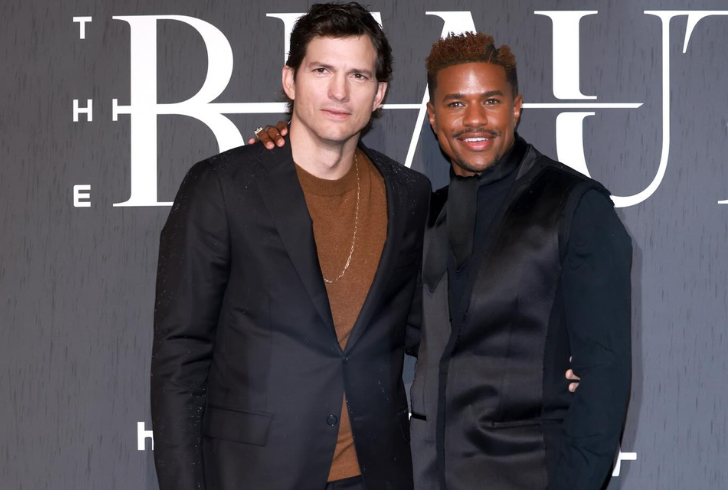
Instagram | justjared | Jeremy Pope describes his new series as a mirror to modern culture’s desires.
Jeremy Pope, known for the drama “Pose”, co-stars alongside Kutcher in “The Beauty.” He described the series as a question posed directly to viewers.
“How much would you give or sacrifice to experience ultimate beauty or success?” Pope asked.
He described the show as a reflection of where modern culture currently stands.
Rebecca Hall, who stars as an FBI agent investigating the mysterious deaths of models, also sees literary echoes in the series. She compared it to Oscar Wilde’s “The Picture of Dorian Gray,” a story she had previously been associated with through film.
Hall warned of the emotional toll of chasing external ideals.
“If you keep chasing some version of beauty that’s outside of yourself, you may never be satisfied,” she said.
Her character works alongside a younger FBI agent played by Evan Peters and quietly struggles with doubts about her own appearance. Hall said the role made her question society’s direction.
“There’s this notion that there is a standard we should all go out and buy,” she said. “It’s madness.”
She added that the unsettling part of modern life is how money allows people to alter their appearance almost without limits.
Where the Conversation Stands Today
Critics have also drawn strong links between the series and real life. The Telegraph’s Anita Singh described “The Beauty” as a satire of social media perfection, cosmetic tweaks, and weight-loss injections, noting that its science-fiction elements feel uncomfortably close to reality.
Ashton Kutcher’s comments and “The Beauty” point toward a broader cultural reckoning. Beauty standards no longer live solely in Hollywood scripts or casting calls. They are reinforced daily through screens, algorithms, and social validation.
The series, along with voices from its cast, raises a clear question: when appearance becomes a currency tied to power and success, what does it cost the individual and society as a whole?