Why Do Orcas Smash Giant Sunfish So Hard They Explode?
Orcas have earned a reputation as some of the smartest hunters in the ocean. They work together, solve problems, and even pass hunting skills from one generation to the next. Even so, marine biologists were stunned after witnessing a behavior that had never been officially described before.
Off the coast of Mexico’s Gulf of California, researchers recorded orcas deliberately smashing giant sharp-tail sunfish with such force that the massive fish burst into thousands of pieces. The dramatic scene looked almost unbelievable. Yet it happened not once, but on two separate occasions, giving scientists a rare look at another clever hunting strategy developed by these remarkable predators.
The Powerful Hunting Trick Was Caught on Camera
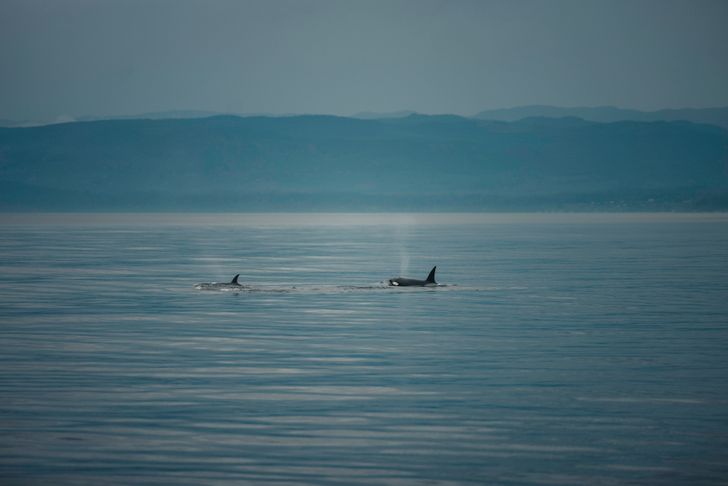
Lure / Pexels / Dr. Kathryn Ayres, a scientist with the ocean conservation nonprofit Beneath The Waves, was filming underwater with a GoPro camera when the extraordinary moment unfolded.
An adult female orca held the tail of a dead sharp-tail sunfish, keeping the huge fish steady in the water. Moments later, a larger orca charged straight toward the floating carcass at full speed. Just before impact, the female released her grip. The collision produced a loud crunch as the fish burst apart into countless white fragments that spread through the water.
Scientists initially thought the event might have been a rare accident. That idea quickly disappeared after another nearly identical encounter was filmed in September 2025 in the same region.
The second recording came from Héctor Franz, a digital creator working in ecotourism. Once again, one orca held a sunfish in place while another rushed forward and smashed it with incredible force. The result looked almost exactly like the first event, leaving little doubt that this was an intentional hunting technique rather than a random act.
Why Target Such a Tough Fish?
The sharp-tail sunfish is not an easy meal. It ranks among the largest bony fish on Earth and can grow longer than three meters while weighing up to two tons. Its unusual body is protected by an incredibly thick, rubbery layer packed with collagen.
That tough outer skin makes the fish difficult to bite apart. Even powerful predators would struggle to tear large pieces from the carcass using their teeth alone. Breaking the fish into smaller chunks solves that problem almost instantly.
Instead of spending time ripping through dense tissue, the orcas use pure force to shatter the body. The impact creates hundreds of bite-sized pieces that are much easier to eat. It is an efficient solution that shows just how adaptable these marine mammals can be when faced with difficult prey.
Researchers believe this behavior developed because it saves time and energy. Every successful hunt requires effort, so finding a faster way to prepare food offers a clear advantage for the entire pod.
The Meal Is Shared Across the Family
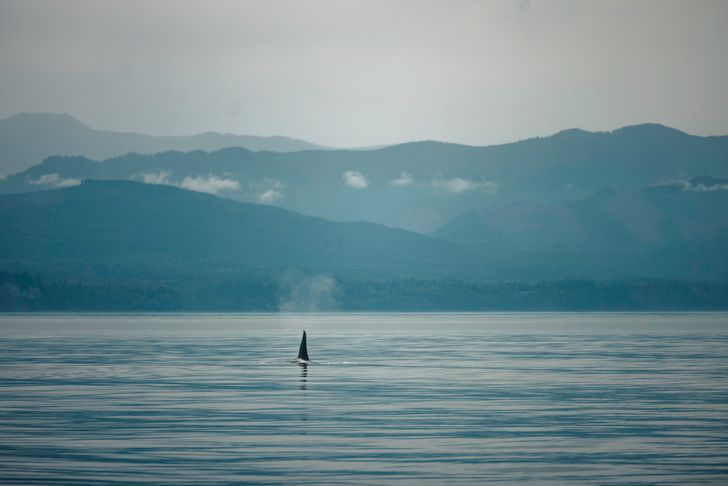
Lure / Pexels / The adult orcas did not appear interested in the smallest fragments created by the explosion. Instead, they focused on the larger chunks left behind after the impact.
Meanwhile, the juvenile orcas eagerly collected many of the smaller floating pieces scattered throughout the water.
This pattern suggests the adults may be preparing food for younger members of the family. Young orcas have smaller teeth and less hunting experience, making large pieces of dense fish much harder to handle.
By smashing the sunfish into manageable portions, the adults could be giving calves and younger whales easier access to a nutritious meal. Researchers describe this as a possible form of parental care, helping younger pod members eat more efficiently while learning valuable feeding behaviors.
The feeding benefit seems obvious, but researchers believe something else may also be happening. Orcas are famous for mixing work with play.
Scientists have documented whales surfing waves, tossing seaweed across their backs, and interacting with objects simply because they appear to enjoy the activity. They often play with prey before eating it, displaying behavior that goes beyond basic survival.
Dr. Kathryn Ayres believes this explosive feeding strategy may include an element of fun. The coordinated timing, the high-speed charge, and the dramatic impact all suggest the whales could enjoy the challenge as much as the meal itself.