How Addison Rae and Sabrina Carpenter Are Turning Up the Heat in Pop Music
Over the past year, mainstream pop has taken a turn—one that’s bold, suggestive, and unapologetically sexy. Artists like Sabrina Carpenter and Addison Rae are leading a new wave of performance and aesthetic choices that harken back to earlier eras of overt femininity and sensual showmanship. But as their visuals heat up, so does public debate. What’s behind the intense reaction? And why does their confidence seem to unsettle so many?
Let’s break down how pop’s latest transformation is shaking things up and why audiences can’t seem to agree on whether it’s a throwback or a problem.
Sabrina’s Reign as the Face of Bold Pop Is No Accident
Sabrina Carpenter’s transition into a more provocative persona wasn’t sudden—it was deliberate and layered. From her live performances referencing sex positions to the “Man’s Best Friend” album cover, which features her on all fours in a black mini-dress while a suited man tugs at her hair, Sabrina is playing with old-school imagery.
The styling is straight out of early 2000s pop—think Jessica Rabbit meets classic pin-up—but with a knowing wink that today’s audiences either love or critique intensely.
This aesthetic shift didn’t arrive in a vacuum. After years of self-empowerment anthems and girl-next-door branding, many female artists are choosing to reclaim exaggerated femininity. Sabrina’s creative choices aren’t just about looking provocative—they challenge the audience to examine why they’re so rattled by sexuality that doesn’t ask for approval.
Addison Rae and the TikTok-to-Pop Pipeline

Instagram | addisonraee | No longer just an influencer, Addison Rae is now making waves as a pop singer.
Addison Rae, a name that first caught fire through TikTok, has moved from influencer status to full-blown pop act. Her debut album “Addison” dropped with a series of eye-catching performances, one of which featured her in lingerie-like outfits reminiscent of 2000s Victoria’s Secret runway shows. What makes Addison’s style stand out is its clarity—it doesn’t try to be mysterious. It’s all sparkle, choreography, and ultra-feminine glam.
Still, much of the online reaction has questioned whether Addison’s aesthetic resonates beyond a niche crowd. Some critics call it nostalgia-driven; others think it’s performative rather than personal. Either way, the response is proof that she’s getting noticed—and in pop, attention still counts as currency.
Why the Sudden Cultural Whiplash?
The reaction to Sabrina and Addison’s performances says more about the audience than the artists. During the 2010s, mainstream pop leaned into relatability—songs about best friends, anxiety, and self-acceptance took center stage. The sexy spectacle of early Britney Spears and Christina Aguilera faded into the background.
Now that it’s making a comeback, some fans are confused or even offended. But it’s worth noting that this shift isn’t about shock for shock’s sake. There’s a calculated return to high-drama glamour—big hair, tight silhouettes, and intentionally over-the-top visuals. It’s nostalgia with a twist: today’s performers are self-aware and unapologetically in control.
The Disappearance of the “Good Girl to Bad Girl” Arc
In past decades, stars like Janet Jackson, Miley Cyrus, and Christina Aguilera famously shed their “innocent” public image in dramatic, often controversial fashion. Today’s pop stars skip that transitional phase entirely. Sabrina, for example, began her career at Disney but didn’t linger in a squeaky-clean mold long enough to make her current persona feel like a shock.
That absence of a build-up might explain why some viewers are still surprised. There’s no tabloid countdown, no hand-wringing about a teen star “growing up too fast.” Instead, these artists enter the spotlight already aware of their image, and the internet doesn’t quite know what to do with that confidence.
Pop Sensuality in the Age of Oversharing
Social media has stripped performances of mystery. Clips get chopped, reactions go viral, and everyone forms opinions from 10-second snippets. As a result, nuanced performances—like Sabrina’s tongue-in-cheek references or Addison’s vintage-style dance routines—can get lost in translation.
On TikTok, where attention spans are short and reactions come fast, artists aren’t just judged by their music, but by the optics of everything they wear and do. Sensuality in this environment becomes both a tool and a target.
Is Pop Creativity Running in Circles?
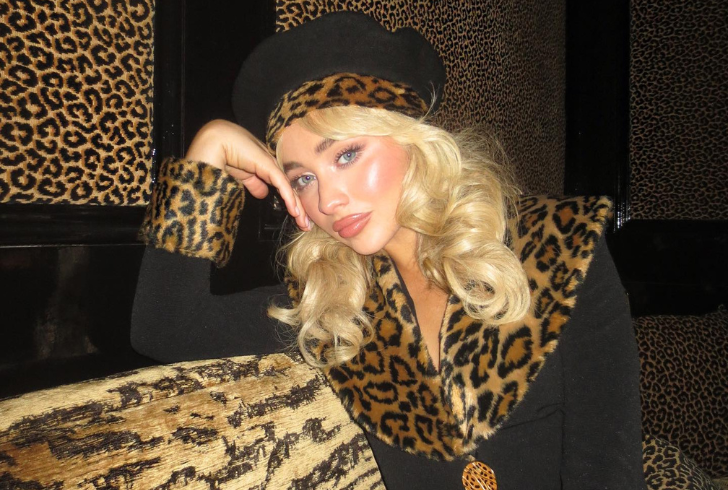
Instagram | sabrinacarpenter | Sabrina’s “Manchild” video captures a Gen Z essence, building a moment and character with its all-female cast.
Some critics argue that this wave of hypersexual pop is simply recycled from the early aughts. But there’s more beneath the surface. Yes, there are visual references to “Dirrty”-era Christina and “Slave 4 U”-style dance breaks, but the tone is different. Today’s performances often lack the physical intimacy of the past—they’re theatrical, exaggerated, and often solo.
Sabrina’s “Manchild” video features her alone or with other women, while Addison sings about fame, shopping, and her parents’ divorce with a level of detachment that feels very Gen Z. It’s not about desire—it’s about creating a vibe, a character, a moment.
The Reaction Isn’t Just About the Music
The outrage surrounding Sabrina and Addison’s choices isn’t purely artistic—it taps into a deeper discomfort around how femininity is expressed in 2025. Their use of campy, exaggerated sex appeal blurs the line between empowerment and performance, and that ambiguity makes people squirm. But that discomfort may be part of the point.
These artists aren’t trying to be relatable—they’re trying to be memorable. And that shift may just be what pop music needs after years of playing it safe.
Why This Cultural Flashpoint Matters
The mix of nostalgia, satire, and bold sensuality brought forth by Sabrina and Addison signals a shift in pop’s direction. It’s louder, more visual, and unapologetically stylized—but not necessarily more provocative in content.
That contradiction—sexy on the outside, tongue-in-cheek on the inside—is what’s catching the public off guard.
Whether it’s a full-blown revival or just a temporary detour, the current moment in pop is a reminder that audiences still care deeply about how femininity is performed, marketed, and consumed. And Sabrina? She’s not just singing—she’s starting conversations that go far beyond the stage.